
White People With Dreadlocks: How To Start Safely (Expert Guide)
A clear, direct guide from a Master Loctician who works with Caucasian dreadlocks every week in a real Florida salon.

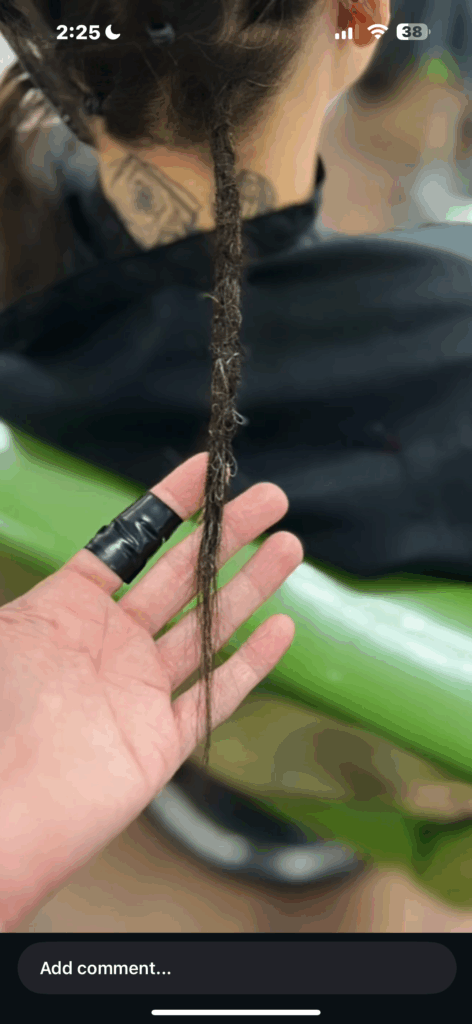

Can White People Get Dreadlocks?
The Short Answer
Yes, white people can get dreadlocks, but the process requires different techniques than textured hair.
Because straight or fine hair lacks a tight curl pattern to hold the loc together naturally, methods like crochet locking or backcombing are safer and more effective than twisting with gel. Successful locs on Caucasian hair rely on friction and tangling rather than coiling.
If you are researching white people with dreadlocks, you might feel overwhelmed by the conflicting information online. One forum says you need heavy wax, another says to never wash your hair, and a third claims it isn’t even possible for your texture. It is easy to feel confused about whether your hair can handle the process safely.
The short answer is: Yes, straight and fine hair can lock beautifully. However, the journey looks very different than it does for more textured hair types. Because your hair structure is different, your starting method, maintenance, and products must be specialized to prevent damage.

Can Straight or Fine Caucasian Hair Actually Lock?
Many clients ask me if their hair is “too slippery” or “too straight” to hold a dreadlock. In my chair, I have worked with every hair type imaginable, from silky straight blondes to coarse, thick waves. I can tell you with confidence that all hair can lock; it just needs the right mechanical friction to get there.

Why "Twisting" Doesn't Work for Caucasian Hair
If you go to a stylist who doesn’t specialize in straight hair, they might try to start your locs with a “comb coil” or “gel twist.” For white people with dreads, this usually results in the hair unraveling the moment you wash it.
Gel relies on the hair’s natural curl to hold the spiral. On straight hair, gel just weighs it down. At our Dreadlock salon in Tampa, we often see clients come in for corrective work after spending money on gel twists that slipped out after three days. For your texture, we need mechanical knotting, not product-based styling.
Think of a curl pattern like a natural hook. When curly hair strands wrap around each other, they hook together easily, like Velcro. Straight hair is more like silk ribbon—it wants to slide apart. To create white people locs that last, we have to manually create that internal friction. We aren’t relying on the hair to spiral; we are creating a dense, woven network of knots that eventually settle into a solid matted form.

The Best Starter Methods for White People With Dreadlocks
Choosing the right start is critical. If you start with a method that creates weak spots, you will fight breakage for years. Here is how we approach starter locs for straight texture.
The Crochet Method (Instant Locs)
This is currently the gold standard for white people with starter dreads. Using a tiny, specialized crochet hook (usually 0.6mm or smaller), a professional loctician weaves the hair strands into a tight, uniform cylinder.
• Pros: You leave the salon with hair that looks like mature dreadlocks on day one. You can wash them almost immediately.
• Cons: It is labor-intensive and requires a highly skilled professional to avoid breaking the hair.
Backcombing and Palm Rolling
This is the traditional “old school” method. We tease the hair section by section to create a puffy knot, then palm roll it into shape.
• Pros: softer look initially; less initial tension on the scalp.
• Cons: These locs are very soft and fragile for the first 6 months. They will look puffy and frizzy until they mature.
Why We Avoid the "Neglect" or Freeform Method in the Salon
The “neglect” method involves simply stopping brushing and letting hair mat naturally. While some choose this, I rarely recommend it for clients who want a more polished or uniform look. It takes years, and the uneven weight distribution can sometimes cause severe thinning at the root, leading to traction alopecia. Controlled sectioning protects your scalp health.
However, if you already have freeform locs, we can absolutely maintain them. We specialize in separating fused roots, relieving tension spots, and “tidying up” the aesthetic so you can keep your freeform look without risking hair loss.

What to Expect: The Maturation Timeline
One of the biggest misconceptions I see is the idea that you get dreadlocks, and you are “done.” Dreadlocks are a journey, not a hairstyle. Here is the reality of the timeline for Caucasian hair.
The "Baby Stage" (Months 1–3)
Your locs will feel stiff and might stick straight out. This is normal. The internal knots are tight, but the hair hasn’t relaxed yet. You might experience some scalp itchiness as your skin adjusts to the new parts.
• Pros: You leave the salon with hair that looks like mature dreadlocks on day one. You can wash them almost immediately.
• Cons: It is labor-intensive and requires a highly skilled professional to avoid breaking the hair.
The "Teenage Stage" (Months 4–12)
This is the stage that tests your patience. Your locs will shrink, sometimes losing up to 30% of their length. They will get frizzy, fuzzy, and lumpy. We call these “loops” and “bumps.”
In my chair, I often see clients panic during this stage. They think their hair is breaking or unravelling. It usually isn’t. The hair is just shifting around as it tightens. This is a sign of progress, not failure.
Full Maturity (12–18+ Months)
Around the one-year mark, the locs become solid, dense, and uniform. They stop shrinking and start gaining length again. They settle down and lie flat. This is the “dreadhead” look you likely visualized when you started.
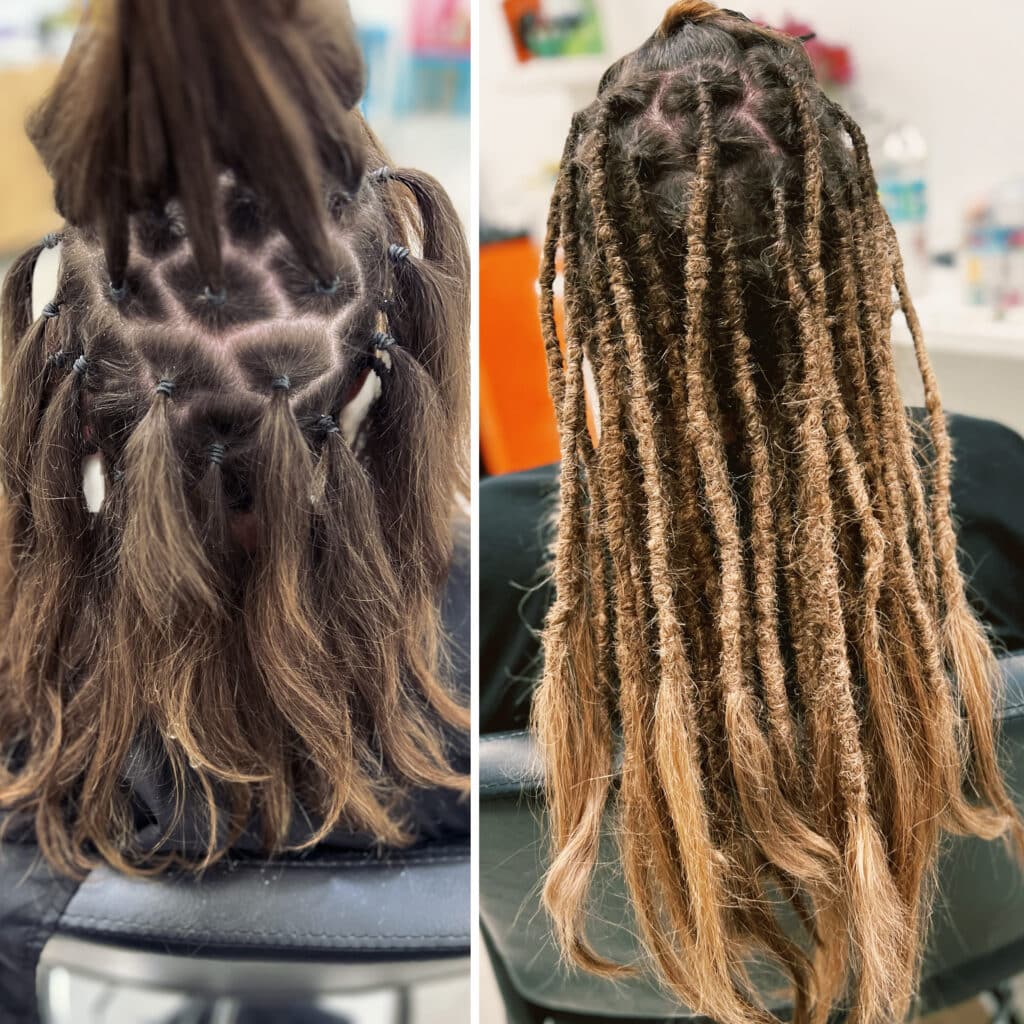
Maintenance Rules for Fine and Straight Hair
How to care for caucasian dreadlocks is fundamentally different from caring for loose hair. The maintenance and care rules you followed for 20 years no longer apply.
Washing Frequency and Shampoo Choice
There is a persistent myth that people with dreadlocks don’t wash their hair. This is false. In fact, dirty hair has oil in it, and oil creates “slip.” Slippery hair unravelling is your enemy.
You need to wash your dreads to keep them tight. Clean, dry hair locks faster. I typically recommend washing once a week or every 10 days using a residue-free shampoo. You must avoid shampoos with:
• Silicones (Dimethicone)
• Heavy moisturizers
• Sulfates that strip color (if you color your hair)
The Danger of Wax and Heavy Products
Decades ago, heavy beeswax was the only way people knew how to make straight hair lock. We now know this is detrimental to hair health. Wax does not wash out. It sits in the center of the loc, attracting dirt, lint, and moisture. Over time, this buildup can rot inside the loc, leading to mold and a heavy, musty smell.
In my experience, removing old wax is the most difficult corrective service we perform. We often have to soak locs for hours to get the gunk out. Do not use wax. Mechanical friction is enough.
Drying Your Locs Thoroughly
Dreadlocks act like a sponge. If you wash your hair and tie it up while it is damp, it will mildew. You must ensure your locs are 100% dry, all the way to the core, after every wash. This might require a hood dryer or a long session with a diffuser.
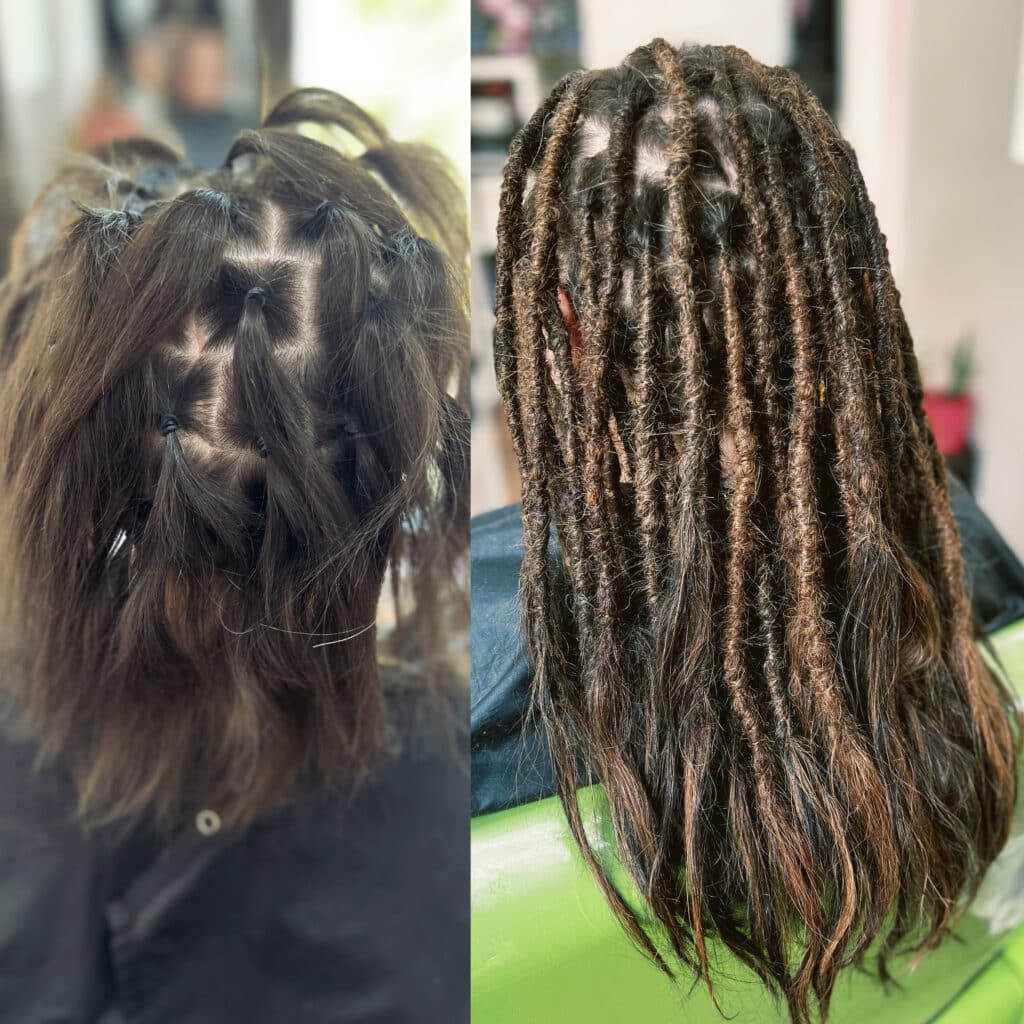
Common Problems and Professional Fixes
Even with perfect care, issues arise. Here are the most common challenges for white people locs and how we handle them.
| Problem | What It Means | Professional Solution |
|---|---|---|
| Loops and bumps | Hair is shrinking unevenly. | Usually left alone to settle, or carefully pulled back in with a crochet hook. Also stretching when damp will help this prevent most of the time |
| Slipping at the Root | The new growth is straight and isnt knotted into the dread yet. | Root maintenance (interlocking or crochet) to tighten the base. |
| Flat Spots | Sleeping or pressure on the same area while locs are damp. | Palm rolling after washing and rotating positions. |
| Thinning Roots | Too much tension or infrequent maintenance. | Combining thin locs with stronger neighbors and easing tension to save the hair. |
Thinning at the Root:
This is a red flag. If your locs are getting heavy and your hair is fine, the weight can pull on the follicle. If you see your parts getting wider or feel soreness, you need a professional assessment immediately. We may need to combine locs or add the loose hair to distribute the weight better.
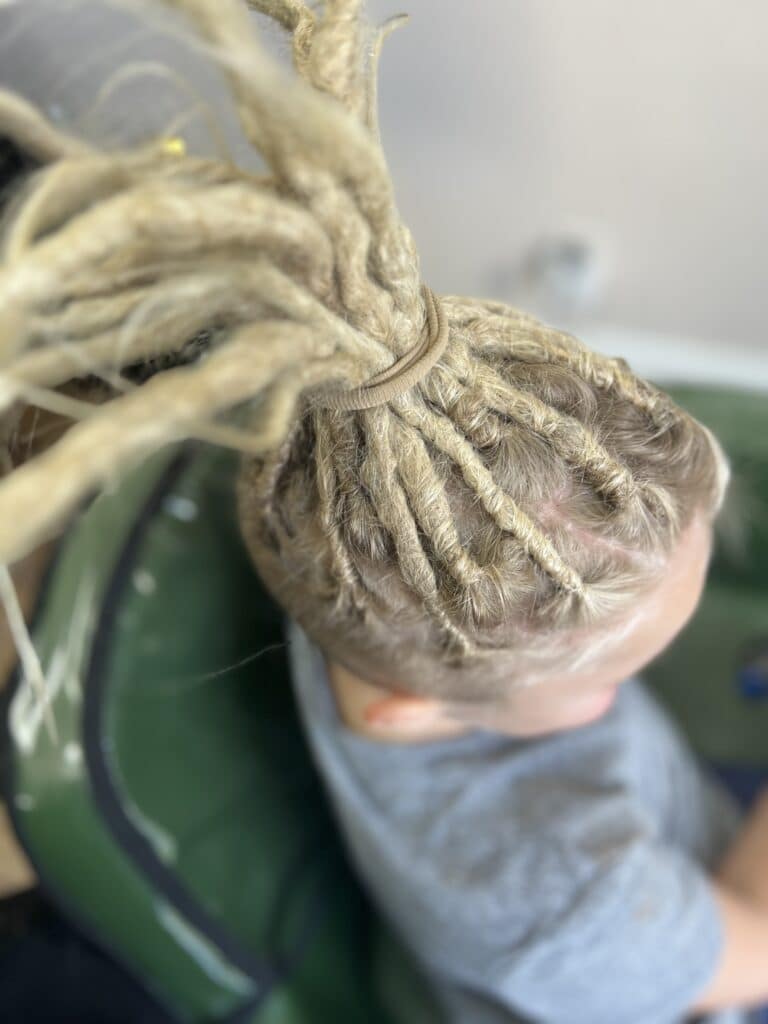
Professional vs. DIY: Safety First
Many people try to start dreadlocks at home to save money. I understand the appeal, but I need to be honest about the risks.
The Risks of At-Home Chemical Kits
Please avoid “dread perm” kits sold online. These chemicals damage the protein bonds in your hair to force it to texture. I have seen clients fry their hair to the point of breakage with these kits. Once the hair is chemically melted, we cannot fix it; we have to cut it.
Furthermore, aggressive latch-hooking at home often results in tearing the hair root. You might feel like you are making it tight, but you are actually ripping the hairs integrity. This damage doesn’t show up for months, but when it does, it looks like locs popping off at the scalp.
Why You Can Trust This Guide
About Marlaina
- 20+ Years of Loc experience
- Former Texture Specialist
- Owner of Loc Salon
- Easy & Fast Online process
This guide was written by Marlaina, a Certified Master Loctician and Texture Specialist based in Tampa, Florida. With over 20 years of hands-on loc experience, Marlaina specializes in all hair textures, including the unique challenges of locking fine and straight hair.
As the owner of one of Florida’s leading dreadlock salons, she works daily to repair damage from DIY methods and improper loc techniques. She also is the former Hair Texture Specialist for a top global hair school, ensuring that every piece of advice in this article is backed by technical science and real-world salon results.
We specialize in helping you navigate this safely. Whether you need a brand new install or a “rescue” session for existing locs, we are here to help.

Happy Clients
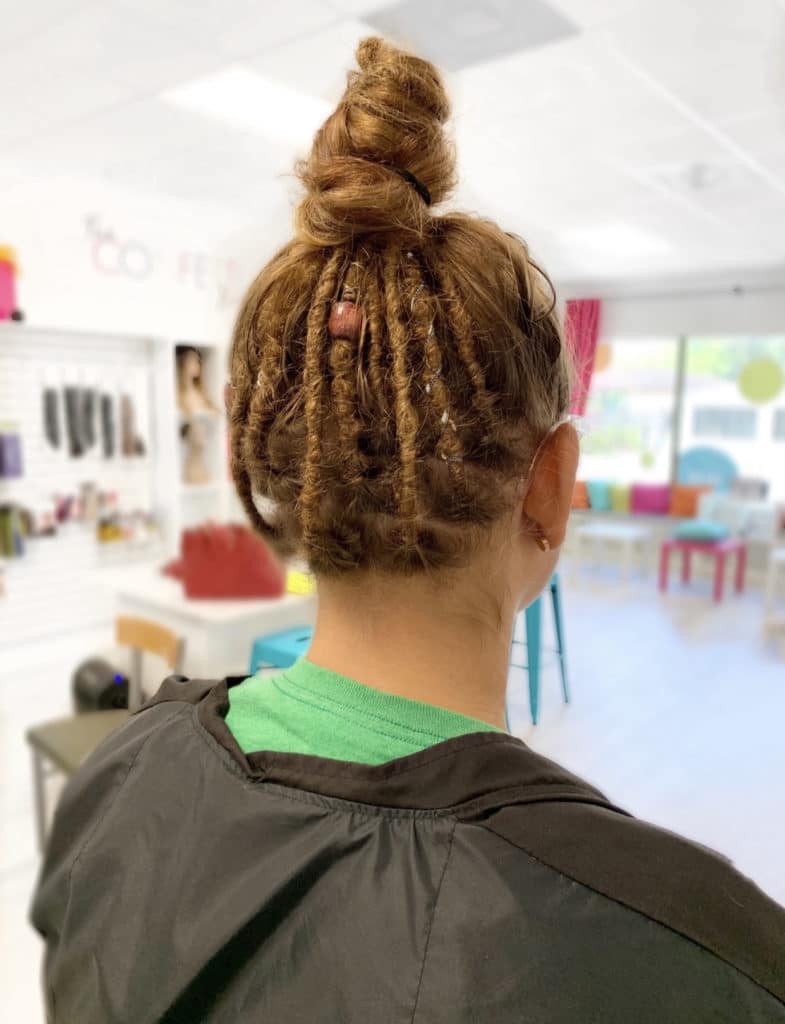
“Marlaina did a wonderful job on my hair!
I started my dread journey today & I could not be more pleased. She explained everything to me as she went, she gave me useful information on how to take care of them, and she even decorated them for me. She was surprisingly fast and my dreads came out AMAZING.”
Dakota

“Marlaina is a wonderful dread artist and an even better person! Going to her studio is relaxing and an experience I look forward to every time. She is meticulous with her work and my hair looks perfect every time. Definitely worth the drive!!”
Heather

“I have been dreaming of having these dreadlocks installed for so long and Marlaina did not disappoint! I’m totally in love with my new look!! 😍 The shop is clean and welcoming. I have nothing but love for Hair Extensions Inc. “
Marcy
FAQ: White People WIth Dreadlocks
Explore the unique needs of straight hair textures with advice from a [Texture Specialist]. For more information about locs, visit our Dreadlock FAQ Blog.
?
Eventually, yes, if left alone for a long time (years). However, it tends to form large, uneven mats rather than cylindrical locs because of inconsistent sections . Professional methods speed up this process and control the shape and size
It is possible to comb out dreadlocks, even after years, but it is incredibly time-consuming and difficult. You should enter this journey assuming it is permanent, but knowing that removal is an option if you are willing to put in the work (and lose some length).
Only if they are not washed or dried properly. Clean dreadlocks smell like clean laundry. The “dread smell” usually comes from trapped moisture (mold) or buildup from using wax and heavy gels.
It typically takes 12 to 18 months for straight hair to fully mature. The crochet method gives you the look instantly, but the internal structure still needs time to settle.
*Standard messaging rates from your carrier may apply. Text communication is reserved for non-pricing questions only.