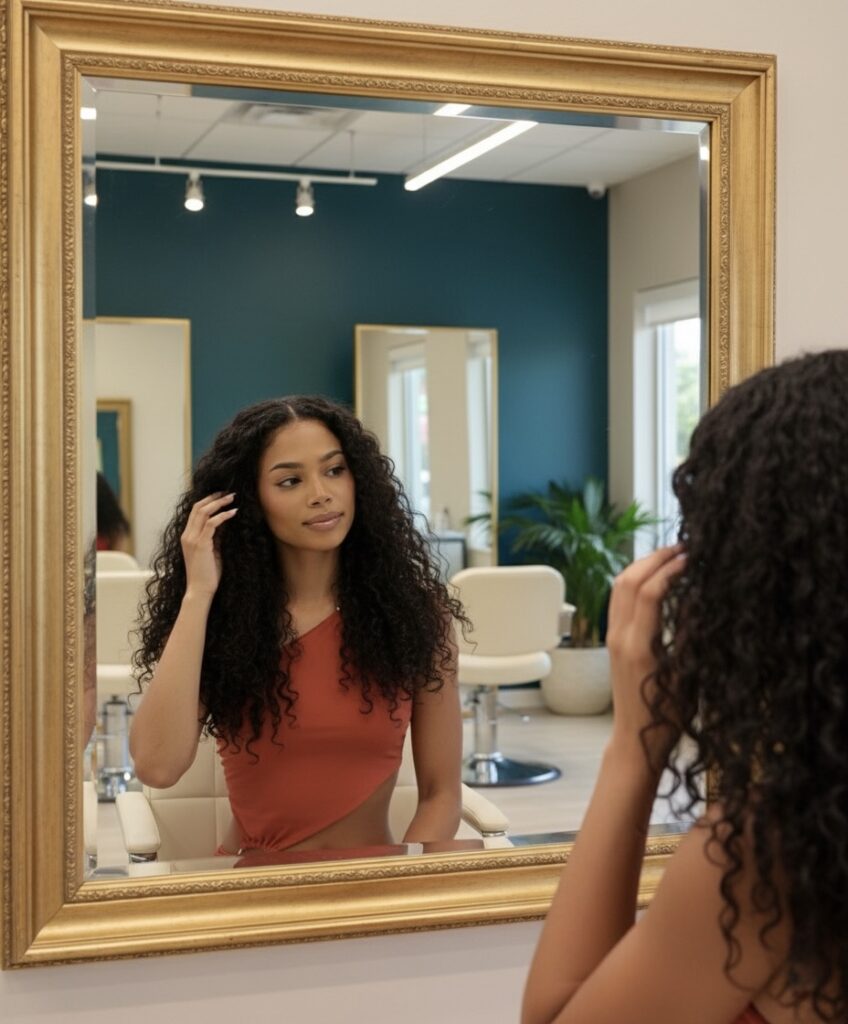


Best Way to Sleep With Hair Extensions
Date STYLE Best Way to Sleep With Hair Extensions Expert-Backed Tips That Keep Your Install Gorgeous Start Your Journey Why This Guide Matters A premium install can lose its luster in just a few nights if you’re sleeping the wrong way. Below, you’ll find the exact nighttime routine I give my Tampa studio clients to keep extensions fresh, full, and tangle-free for months. Quick-Start Checklist(Skim This Before Bed Tonight) Action Why It Works Brush with a loop brush from ends – roots Lightly mist a silicone-free leave-in Lightly mist a silicone-free leave-in Adds slip & moisture; prevents friction Adds slip & moisture; prevents friction Keeps tracks smooth and prevents mattingat the nape Lightly mist a silicone-free leave-in Reduces friction by up to 43 % comparedpillowcase)with cotton Slip on a silk or satin bonnet (or use a silk Reduces friction by up to 43 % comparedpillowcase) Keeps your head from sinking and foldingwefts (Pin or print this mini-routine and tape it near your vanity for easy reference.) 1. Start With the Right Nightly Detangling Technique Use a Loop Brush or Wet-Brush Style Paddle Standard bristles can snag both tape-ins and hand-tied beaded rows. A loop brush’s closed-loop nylon bristles glide over bonds while catching shed hair. Always begin at the ends, then mid-lengths, then roots. Pro Tip:Hold the base of your extensions with your free hand; it counter-tensions the bond so you’re not tugging. This is crucial for microlinks and I-tips, which rely on tiny copper cylinders that can slip when stressed.⸻ 2. Apply Lightweight, Bond-Safe Hydration Why Silicone Free Matters Heavy silicones can build up where extensions meet your natural hair, causing slippage—especially on tape-in extensions. Choose a water-based leave-in with hydrolyzed proteins or squalane. Mist lightly from mid-shaft down; avoid bonds and hand-tied knots. Ingredient Watch-List:Skip dimethicone, amodimethicone, and heavy oils (castor, coconut) right at the attachment point. Pro Tip:If you wear clip-ins for occasional volume, remove them entirely before bed—and store them in a ventilated satin pouch to retain shape. ⸻ 3. Choose the Right Sleep Style for Each Extension Method Extension Type Best Sleep Configuration Extras Hand-Tied Wefts Two loose braids or one rope twist Secure ends with a snag-free silk scrunchie Tape-Ins High silk “pineapple” bun Keep bun soft—no tension on tapes Microlinks / I-Tips Four chunky twists Distributes weight, prevents bead rotation Sew-Ins Scarf wrap plus bonnet Keeps base braids flat & prevents lint 4. Upgrade Your Pillow Game Silk vs. Satin vs. Cotton <brSilk pillowcase: Natural fibers, temperature-regulating, and great for reducing extension frizz. Breathes well in Florida humidity. Satin pillowcase: Budget-friendlier polyester weave with similar glide, but can retain more heat overnight. Cotton pillowcase: Absorbs 27× more moisture than silk—leading to friction, frizz, and rougher cuticles. Think local: Florida’s humidity = sweat + cotton = friction. A breathable silk case keeps both your natural hair and luxury wefts smooth—even during summer storms or restless nights. ⸻ 4. Upgrade Your Pillow Game Silk vs. Satin vs. Cotton Silk pillowcase: Natural fibers, temperature-regulating, and great for reducing extension frizz. Breathes well in Florida humidity. Satin pillowcase: Budget-friendlier polyester weave with similar glide, but can retain more heat overnight. Cotton pillowcase: Absorbs 27× more moisture than silk—leading to friction, frizz, and rougher cuticles. Think local: Florida’s humidity = sweat + cotton = friction. A breathable silk case keeps both your natural hair and luxury wefts smooth—even during summer storms or restless nights. ⸻ 5. Night-Bond Checks (30 Seconds, Once a Week) 1. Part hair to expose rows or tapes.2. Gently press along each bond—feel for lifted corners or tiny loops of shed hair.3. If you detect slippage >⅛″, book a quick-fix appointment. Catching issues early avoids matted roots and costly reinstall fees. ⸻ 6. Morning Refresh: Reverse Friction Fast Even the Best Nighttime Prep Can Leave Impressions In the A.M.: Remove bonnet. Shake hair out gently, starting at the scalp. Lightly spritz with distilled water + 2 drops argan oil. Blow-dry roots on cool for 60 sec to re-fluff volume. ⸻ 7. What NOT to Do (Common Myths Debunked) “I can sleep with wet extensions.”Reality: Moisture + warmth = mildew odors & thread weakening on sew-ins. “Tight ponytails keep hair neat.”Reality: High tension can shift tapes and thin out anchor beads. “Any satin bonnet works.”Reality: Cheap rayon satin can pill and snag. Look for mulberry silk with at least 19 momme weight. ⸻ 8. Product & Tool Checklist Your Sleep Kit Essentials Loop or extension paddle brush 19–22 momme silk bonnet (match our mustard-yellow icon color for brand cohesion) Silk pillowcase (queen size) Snag-free silk scrunchies Lightweight, silicone-free leave-in spray Microfiber turban (for faster, bond-safe drying if you wash at night) ⸻ 9. Troubleshooting Guide Symptom Likely Cause Quick Fix Morning tangles at nape Braid too loose or fell out Secure ends with stronger scrunchie; add a second braid Tape-ins sliding Heavy oil near bonds Clarify, then book professional tape replacement Itchy scalp under sew-in Sweat buildup overnight Use a dry shampoo foam at roots before bed 10. How Long Will My Extensions Last If I Follow This Routine? Hand-Tied Extensions:9–12+ months of hair lifeMove-ups every 4–6 weeks Tape-In Extensions:9–12 months of hair lifeMove-ups every 6–8 weeks Microlinks (I-Tips):9–12+ months of hair lifeMove-ups every 6–8 weeks (depending on strand density) Sew-In Extensions:12–18 months of hair life (if reused)Reinstallations every 8–10 weeks Consistent nighttime care can extend longevity by 25% or more, saving $300–$500 per hair extension cycle. 11. When to Book a Maintenance Visit Bonds feel loose or uneven Extensions tangle within minutes of brushing You notice visible matting at scalp It’s been 8 weeks since your last tighten (hand-tied) or 6 weeks (tape-ins) ⸻ 12. FAQ (Frequently Asked Questions) 1. Can I sleep with wet hair extensions?No. Sleeping with damp or wet extensions—of any kind—can cause tangling, friction, and premature wear. Always dry your hair 100% before bed to prevent matting or bond breakdown. 2. Do silk pillowcases really make a difference?Yes—silk reduces friction, preserving both cuticle integrity and bond security. 3. Should I
Best Way to Sleep With Hair Extensions Read More »